

Agility, as defined by the National Strength and Conditioning Association, is the ability to change directions and gain speed, without losing motor control. It is directly related to speed, balance and coordination skills. There are two types of agility that we want to master, Multi-directional and reactive.
Multi-directional agility is the key to athletic success in every sport. Athletes rely on the ability to change direction quickly, with little wasted time. This ability is critical for both offensive and defensive players in all sports. T.O.P Sports speed and agility training drills specifically develop the physiological and neurological responses that occur within the body that cause multi directional movement.
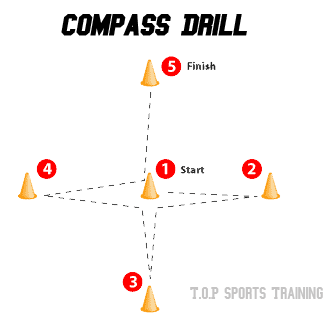
Reactive agility may be the most underrated and underused training method for athletes. Recent studies have shown that the best athletes have better reactive agility. One study found that an athlete’s reactive agility was the only significant factor determining performance. (1) It is the decision-making aspect, and the reaction to an external cue, in these drills that make them so beneficial. Incorporating these drills into your program will improve play on the field or court by helping the athlete react faster and anticipate the next move of the opponent. Here's an example drill, called the compass drill that we love to use.

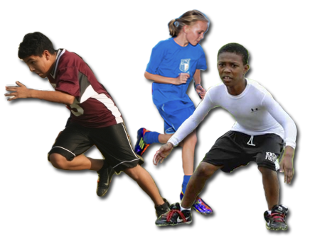
Children develop speed and agility at an early age, when they chase their friends or their family pet around the yard. Children's speed and agility training programs should be developed in age-appropriate stages. National Strength and Conditioning Association exercise specialists suggest that children between the ages of 5 and 8 should be exposed to a variety of movement patterns, which include arm and leg movements performed from a stationary position, jumping moves and exercise that promote spatial awareness.
Skill mastery is enhanced between ages 9 and 13. Exercises that involve running through a maze of cones, moving in figure eight patterns and jumping and landing in a controlled manner are suitable for young teenagers, age 13 to 16.
Plyometric exercises are specialized, high intensity training techniques used to develop athletic power (strength and speed). Plyometric training involves high intensity, explosive muscular contractions that invoke the stretch reflex (stretching the muscle before it contracts so that it contracts with greater force). The most common plyometric exercises include hops, jumps, and bounding movements. One popular plyometric exercise is jumping off a box and rebounding off the floor and onto another, higher box. These exercises typically increase speed, strength, and build strength.
Plyometrics (and any impact exercise) can increase the risk of injury if you do not follow certain safety precautions. The force generated during these exercises requires that athletes use them sparingly and with proper training.
The most important aspect of a safe and effective plyometric program is developing a safe landing technique. This means the athlete lands softly on the toes and rolls to the heels. By using the whole foot (and a larger surface area) for landing, it helps dissipate the impact forces on the joints. The other key to proper landing is to avoid any twisting or sideways motion at the knee.
"One popular plyometric exercise is
jumping off a box and rebounding off the
floor and onto another higher box. This
exercises typically increases speed,
strength, and builds strength."

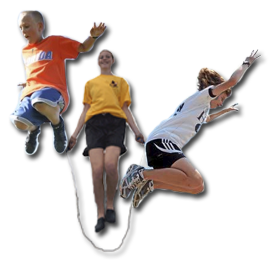

Plyometrics is not just for skilled athletes at the elite level. Studies show that plyometric training has positive effects on a number of performance attributes in 10- to 13-year-old children. It helps develop overall power and high levels of speed-strength by improving running speed and economy; quickness and agility; lower-body power; and the rate of force development—how fast an athlete uses the strength he or she generates.
A proper plyo program involves exercises such as jumping, skipping, hopping, bounding and running. If young athletes follow some basic principles, incorporating plyos into their training programs can reap huge rewards and take their performance to new levels.
Researchers are finding that when implemented at certain stages of development—particularly ages 10 to 11 and 12 to 13—plyo training can propel future development.
Youth in these age ranges can perform slow to intermediate work that trains their muscles' stretch-shortening cycle. A muscle is like a rubber band: the more you stretch it, the more power/force it has. If you stretch a large rubber band, it can generate immense power and force. All athletes need to improve their muscles' ability to stretch farther—to create larger rubber bands!
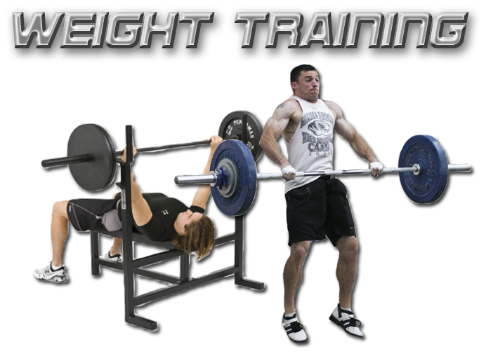
There's no getting around the fact that weight training plays an integral part in sports performance and ability. The combination of speed, agility, endurance, and strength equals domination in the field of play.
There are tons of different philosophies, methodologies, and preferences to the kind of weight training is best. That is partially true, there are different weight training programs for different sports. A tennis player will not train the same that a rugby player will, because their sports are completely different from one another, and use their muscles differently in their sport specific movements.
T.O.P Sports Training will help develop an individual training program designed specifically for your sport.
© 2015 All Rights Reserved. | T.O.P Sports Training | P.O Box 7451, Bellevue, WA 98007
